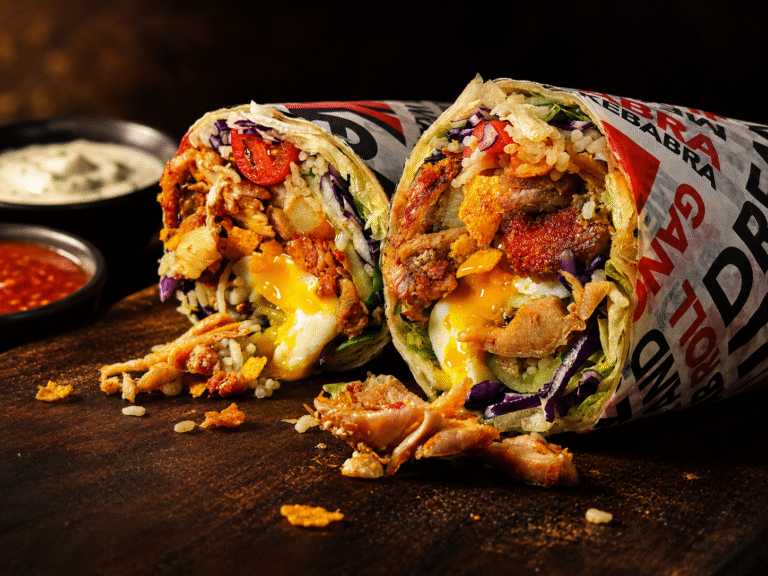


Singaporeans don’t just eat food. We debate it, queue for it, and cross the island for the right plate. So when a dish wins us over, it’s earned it.
Kebabs did exactly that. Here’s how a street food from the other side of the world became a Singapore favourite, and how we’ve been giving it a local accent since 2012.
Where the Kebab Came From
The doner kebab is simple at heart: seasoned meat stacked on a vertical rotisserie, grilled as it turns, and shaved off in thin slices. The word “döner” comes from the Turkish for “turning”.
The vertical rotisserie traces back to the Ottoman Empire in the 19th century, with the city of Bursa often credited as its birthplace. The version most of the world knows today, meat stuffed into bread with salad and sauce, took off in Germany in the 1970s. From there, it spread across Europe, to Australia (which gave the world the Halal Snack Pack), and eventually to Asia.
By the time kebabs reached Singapore, they’d already been remixed a dozen times. We were always going to add our own.
Why Kebabs Clicked in Singapore
We Already Love Grilled Meat
Satay. Chicken wings. BBQ stingray. Singapore has always loved meat cooked over heat. A rotisserie stack of grilled beef and chicken didn’t feel foreign. It felt like a cousin of food we grew up with.
It’s Built for How We Eat
Think about how you order cai png. Pick your base. Pick your meat. Pick your sauce. Kebabs work the same way, and Singaporeans love having it their way.
It’s Halal From the Start
In multicultural Singapore, halal food means colleagues, classmates and families can all eat from the same place. A MUIS-certified kebab shop is an easy yes for a mixed group.
It Fits a Fast-Paced Day
A kebab roll is lunch in one hand. No queue at the economy rice stall, no cutlery, no fuss. For a city that’s always rushing somewhere, that matters.
The Singapore Remix: Local Twists on the Kebab
Our taste buds grew up on sambal, soy sauce, satay and maggi goreng. So why would we serve kebabs exactly the way they do in Europe or the Middle East?
We don’t do “authentic”. We do EPIK. Here’s what that looks like:
- Indomeeat™: kebab meat on Indomie. Yes, really. Read the full Indomeeat story.
- Kebab John: the love child of a kebab and a roti john. We explain how the Kebab John was born.
- Vadai Kebab: kebab meat in a vadai
- Ikan bilis and chilli padi: our favourite local topping combo
- Kebab N’ Chips: kebab meat stacked on chilli chips (crisps, if you’re British)
- Kebab Pilaf Rice: because for many Singaporeans, it’s not a meal without rice
This isn’t cultural appropriation. It’s culinary evolution, Singapore style.
From Quick Snack to Full Meal (and Party Centrepiece)
Kebabs used to be a snack you grabbed on the go. In Singapore, they’ve grown up.
Today, a kebab can be:
- A proper meal: Kebab Pilaf Rice, the Protein Bowl, or a Kebab Salad
- A sharing feast: Kebab Party Platters for 5 to 6 people, loaded with meat, rice, fries and Indomee
- A flex: the Kilo Kebab™, a full kilogram of hand-carved meat
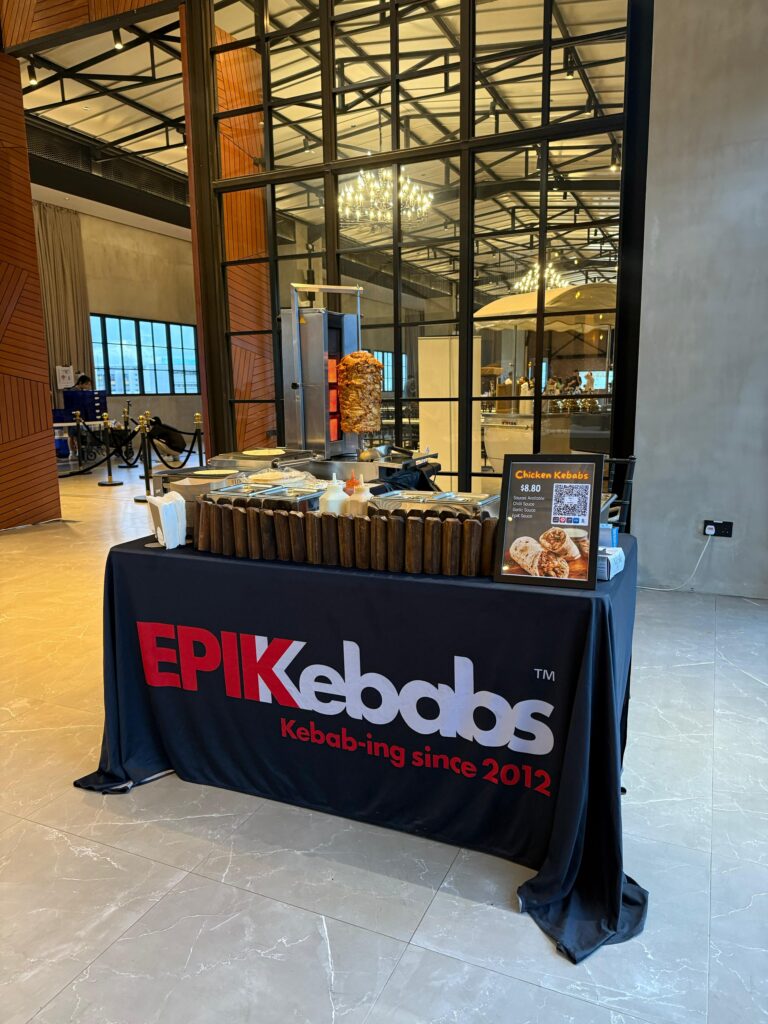
- The main event: kebab live stations at weddings, corporate events and birthday parties, with meat carved fresh in front of the guests
Our Part in the Story
EPIKebabs started in 2012 as a love project, born and grilled right here in Singapore. Our first home was Wilkie Edge, where we spent 13 years before moving to Sunshine Plaza nearby.
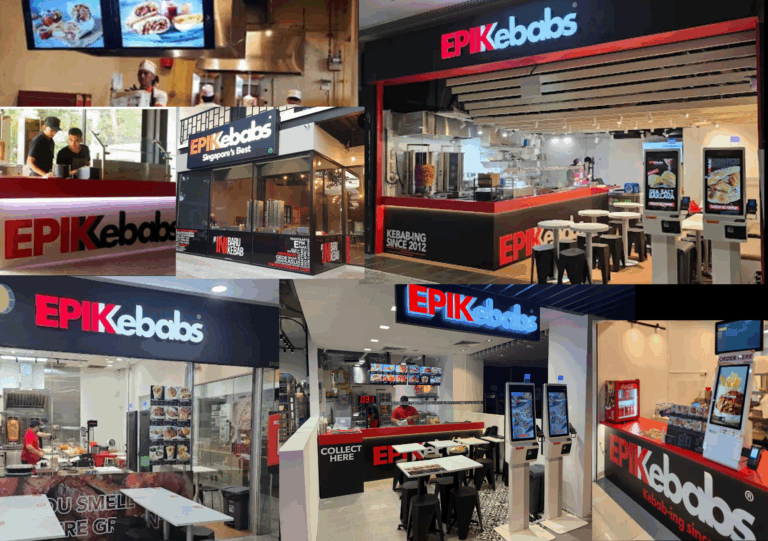
Along the way, we grew to 10 outlets across Singapore, Jakarta and Bandung before the pandemic. We adapted, rebuilt as a sharper quick-service brand, and today run 5 outlets across Singapore: Sunshine Plaza, Aperia Mall, CIMB Plaza, East Village and Galaxis. All halal-certified by MUIS.
We’ve picked up 1,000+ recommendations across Google, Facebook, Instagram, Grab and Tripadvisor, and features in The Straits Times, Berita Harian, EatBook and HHWT. It’s how we became known for the best kebabs in Singapore.
The secret? Same as day one. Meat marinated fresh and hand-carved daily. Sauces, hummus and falafel made from scratch. And a menu built for Singapore taste buds.
This Is Not Just a Kebab. It’s a Movement.
Is a Singapore-style kebab “authentic”? No. It’s better.
In Singapore, authentic doesn’t mean old-school. It means real, relevant and ridiculously tasty. It means kebabs you can eat with Indomie, serve at your birthday party, or proudly introduce to your ah ma and your gym buddy.
So, are we Turkish? Arabic? Shawarma? Doner? Nah. We’re EPIK.
Come taste the not-so-authentic kebab revolution for yourself.
FAQs About Kebabs in Singapore
Why are kebabs so popular in Singapore?
Kebabs are fast, filling and easy to customise, which suits how Singaporeans eat. Grilled meat is already part of local food culture, and halal kebab shops let mixed groups eat together.
What is a Singapore-style kebab?
It’s a kebab remixed for local taste buds. At EPIKebabs, that means creations like the Indomeeat™ (kebab + Indomie), the Kebab John (kebab + roti john), and toppings like ikan bilis and chilli padi.
Where did the doner kebab come from?
The vertical rotisserie behind the doner kebab traces back to the 19th-century Ottoman Empire. The kebab-in-bread version became popular in Germany in the 1970s before spreading worldwide.
Are all kebabs in Singapore halal?
No. Look for a MUIS halal certificate at the shop. Every EPIKebabs outlet is halal-certified by MUIS.
Where can I try EPIKebabs?
Visit us at Sunshine Plaza, Aperia Mall, CIMB Plaza, East Village (takeaway only) or Galaxis, or order online for delivery and pickup.